Independent information
An independent information page about truffle ceremonies
This page is written for anyone considering a truffle ceremony, and for coaches, psychologists and therapists considering it for a client. It is a general information page, not a sales page, written in clear, everyday language without vague spiritual talk or unnecessary jargon.
Here you will find what a truffle ceremony is, where the tradition comes from, what it can mean for people, how to prepare, and what safety considerations are involved. Where relevant, a small, clickable source number is added to a claim so you can follow it to the underlying source yourself.
The basics
What a truffle ceremony is
A truffle ceremony is the use of psilocybin-containing truffles within a deliberately shaped, guided setting. It differs from recreational use through the intention, the preparation, and the presence of an experienced guide who holds the space so you can turn inward.
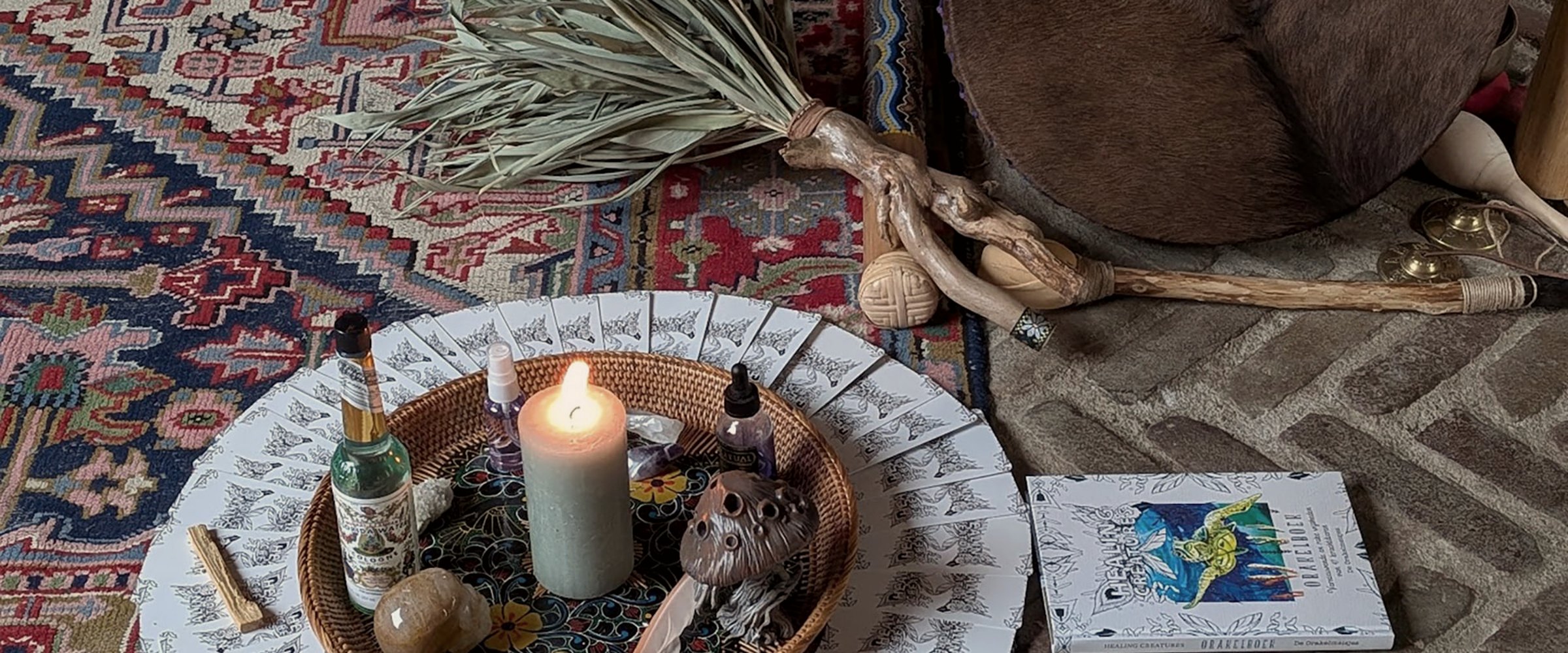
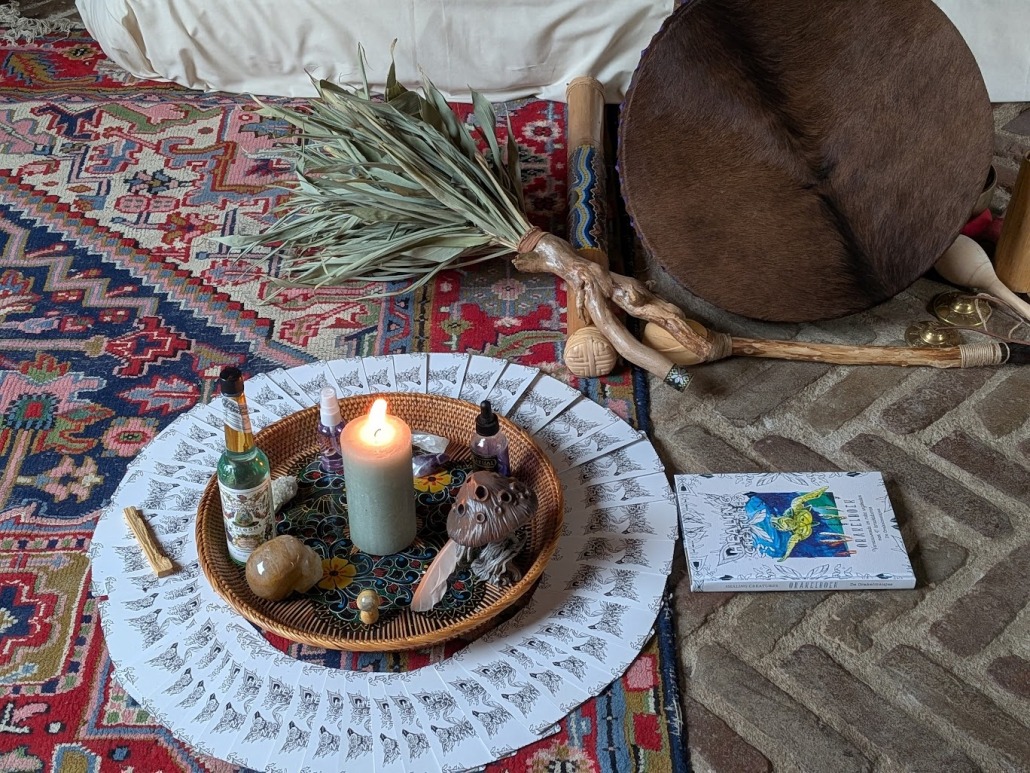
The "ceremony" refers to the framework in which the experience takes place: a quiet room, often with an altar and a mat where you can lie down with an eye mask on. This usually starts with an intake beforehand, which pays attention to your health and safety among other things. During the ceremony there is room for body and breath work to help you settle, and time to share your intention. A professional guides the journey, and there is attention for aftercare once it is over. That framework is not there for atmosphere alone. It gives the experience shape and something to hold onto.
People take part for a wide range of reasons. For some it starts with curiosity: what such an experience is actually like, and what it does to you. For others it goes deeper, toward self-exploration and personal growth, processing loss or grief, or better understanding emotions and recurring patterns. Others are looking for support with an important decision, a difficult relationship, or a period in which they want to feel more connection, with themselves or with others. And for some participants, bigger life questions play a role: meaning, a different view of themselves or life, or a spiritual or mystical curiosity about what else there is to discover. These reasons return in the scientific research further on this page. A ceremony can take place individually, with two people, or in a small group.
Origins
The tradition: where it comes from
What is now called a "ceremony" is not a Western invention. Working with sacred mushrooms follows a long, unbroken line that reaches back much further than the scientific interest of recent decades.
The Mazatec tradition
In the mountains of Oaxaca, Mexico, Mazatec curanderos had used sacred mushrooms for generations in nighttime healing ceremonies, the veladas: chanting, prayer and darkness, aimed at healing and insight.
Maria Sabina
The Mazatec curandera Maria Sabina, the best-known keeper of this tradition, allows American ethnomycologist R. Gordon Wasson to take part in a velada in Huautla de Jiménez. It is the first documented encounter of an outsider with this practice.
The Western discovery
Wasson's article "Seeking the Magic Mushroom" in Life Magazine makes the mushroom world-famous and sets the stage for decades of Western interest, with all the benefit and harm that also brought the Mazatec community.
A renewed science
Contemporary research into psilocybin, in the Netherlands carried among others by the OPEN Foundation, studies with scientific methods what the Mazatec people already knew for centuries. KTNO-accredited training programmes translate that knowledge into a safe, contemporary framework for ceremony leaders.
That lineage is why words like "ceremony", "spaceholder" and "ritual" are not chosen here by accident. A good guide works with respect for where this comes from, not as the owner of a tradition that is far older than anyone working with it today.
What happens
Effects and what to expect
Truffles contain psilocybin. In the body this is converted into psilocin, which acts on the serotonin receptors in the brain. What happens after that differs with every ceremony and for every person.
The effect is usually noticeable after twenty to sixty minutes and lasts roughly four to six hours in total. Sensory perception often changes: colours can become more intense, shapes and patterns start to move, and some people see visuals, as if an extra layer of perception opens up. Others hear more than they see, or gain insights without any imagery at all. The sense of time often changes too, emotions can shift strongly, and there is often more room for inner reflection. There can also be physical sensations, such as a heavy or restless feeling, sometimes called the "body load". No two experiences are the same.
Alongside this physical and sensory layer, many people also describe a mental or spiritual dimension: a sense of unity with their surroundings, a temporary letting go of the usual self-image, or an awareness that feels bigger than everyday life. Some report less fear of death afterwards, or a new kind of acceptance of what they cannot change. These are not guaranteed outcomes and differ strongly from person to person.
The advice that comes back most often from experienced guides: do not hold fixed expectations. A truffle is not a miracle cure that solves a problem the way a key opens a lock. Go in as openly as possible, focus your attention on what you feel physically rather than on what you think, and let the journey find its own shape. This page deliberately gives no dosage advice: a responsible dosage belongs with an experienced guide who knows the intake and can tailor it to the person.
Research
Psilocybin in current science
What was experiential knowledge for centuries is, in recent years, also being studied methodically. This research is still in its early stages, but the first results give a good picture of where attention is going.
Research centres such as the Center for Psychedelic and Consciousness Research at Johns Hopkins University20 and the Centre for Psychedelic Research at Imperial College London21 are studying psilocybin for treatment-resistant depression, addiction (including smoking and alcohol) and obsessive-compulsive symptoms. In the Netherlands, the OPEN Foundation brings researchers, clinicians and policymakers together around this same question.19
One of the most striking results came in 2021, when researchers from Imperial College London published in The New England Journal of Medicine that two psilocybin sessions in people with long-term, moderate to severe depression worked at least as well as six weeks of daily escitalopram, a commonly used antidepressant.13 For a treatment given in just two sessions, that is a notable outcome.
Another well-known field of research concerns people with a life-threatening illness. Studies at, among others, Johns Hopkins University11 and New York University12 describe that participants reported reduced fear of death and more acceptance after a psilocybin session, effects that lasted months to years for some of them.
Researchers suspect that psilocybin temporarily loosens fixed thought patterns, which creates room for new perspectives. This is partly explained by changed activity in the default mode network, the brain network associated with rumination and a fixed self-image. Animal studies also show that psilocybin can stimulate the formation of new connections between brain cells, a form of neuroplasticity that may contribute to lasting changes in thinking and feeling.15
In the United States, psilocybin received "breakthrough therapy" status from the FDA for treatment-resistant depression in 201816 and 201917, a recognition that speeds up research. In early 2026 the FDA took a further step: several psilocybin programmes were granted a priority track that shortens the usual ten-to-twelve-month review period to one or two months, with a first approval decision possibly as early as late 2026 or early 2027.18 In the Netherlands, psilocybin is not yet a recognised treatment within mental healthcare, but it is exactly this kind of research that shows why this centuries-old practice remains meaningful for so many people.
A closer look by theme
What the science says, by topic
Research into psilocybin touches on a wide range of themes. Open whichever is relevant to you.
Consciousness and mystical experience
One of the best-known lines of research into psilocybin concerns what researchers call a "mystical-type experience". American researcher Roland Griffiths and colleagues at Johns Hopkins University first described this in detail in 2006, and follow-up research has repeatedly confirmed the findings since.10 It is a recognisable pattern: a sense of unity and connectedness with everything around you, timelessness, awe and wonder, and a temporarily less sharp boundary between the self and the world outside. Many people also describe it as an experience steeped in love.
What makes this research striking is how participants rate the experience afterwards. In several studies, a considerable share of participants ranked the experience among the most meaningful of their entire life, comparable to the birth of a child. Some participants also describe a gentler relationship to their own mortality, and existential insights that kept working through for a long time. Researchers see this mystical-type experience as one of the factors associated with positive effects in later research into, for example, depression and anxiety.
This experience often raises philosophical questions, and it helps to keep three layers apart. Subjectively, participants often describe something like "everything is one", a dissolving of the usual boundary between themselves and their surroundings. Researchers measure and describe this as a recognisable pattern of perceived unity, timelessness and meaning, without making a claim about the nature of reality. Spiritual traditions interpret such experiences in their own way in turn: the Buddhist idea of "non-self", for example, is mentioned by some as an interesting parallel. Scientific research does not prove that "everything is one", but it does describe that people can experience this in a convincing, personal way during and after an experience with psilocybin.
Depression
For a few years now, psilocybin has been studied as a possible treatment for treatment-resistant depression: depression that does not respond sufficiently to the usual treatments such as antidepressants and therapy. Research centres such as Johns Hopkins University and the Centre for Psychedelic Research at Imperial College London run clinical trials for this.
One of the most striking results came in 2021, when researchers from Imperial College London published in The New England Journal of Medicine that two psilocybin sessions in people with long-term, moderate to severe depression worked at least as well as six weeks of daily escitalopram, a commonly used antidepressant.13 For a treatment given in just two sessions, that is a notable outcome.
In this research, participants do not receive psilocybin as a standalone substance, like a pill you take at home. The sessions take place in a controlled, clinical setting, with extensive preparation beforehand, guidance during the session itself, and structured aftercare afterwards. Researchers regard that guidance as an essential part of the effect. In the Netherlands, psilocybin is not yet a recognised treatment within mental healthcare, but it is exactly this kind of research that is paving the way toward a possible future application.
Anxiety and fear of death
One of the most frequently cited lines of research concerns people with a life-threatening diagnosis, such as metastatic cancer. Researchers such as Roland Griffiths (Johns Hopkins)11 and Stephen Ross (New York University)12 published studies in which participants with such a diagnosis received a single, high dose of psilocybin, in a carefully guided clinical setting.
The findings were striking: in a large share of participants, the fear of death noticeably decreased, and more acceptance of their situation emerged. What makes these studies remarkable is how long these effects lasted. At follow-up measurements, sometimes months or even years later, some participants reported that the reduced fear of death and increased acceptance had persisted, after a single session.
This research took place in intensive, therapeutically guided settings, with careful preparation, medical screening and professional aftercare focused specifically on this stage of life. It shows how deeply and how long a single, well-guided experience can continue to work through.
PTSD and trauma
With PTSD (post-traumatic stress disorder) and trauma, extra caution and honesty are called for. Research into psilocybin specifically for PTSD is still at an early stage, with considerably less clinical data available than for depression or fear of death, for example.
The theory behind possible effects relates to two mechanisms. Psilocybin appears to temporarily reduce avoidance behaviour: the automatic mechanism by which people with trauma steer clear of painful memories and feelings. Researchers also see reduced activity in the so-called default mode network, the brain network associated with rumination and fixed thought patterns among other things, combined with a temporary increase in neuroplasticity: the ability of brain cells to form new connections.15 The idea is that these effects together can create room to approach traumatic memories with more inner distance.
This is largely theory, based on early and small studies. With current, severe PTSD, caution is essential: always consult a treating clinician first before considering a ceremony. This is explicitly not a recognised treatment for PTSD.
Addiction
Psilocybin is also being studied as a possible aid for addiction, with most research so far focused on smoking addiction. A pilot study by Johns Hopkins University combined a limited number of psilocybin sessions with behavioural therapy guidance aimed at smoking cessation.14
The results were striking: of the fifteen participants, 80 percent were still not smoking after six months, a considerably higher percentage than is usually seen with standard treatments for smoking addiction. Researchers suspect that a combination of factors plays a role here, including breaking through entrenched habit patterns and the motivating effect of a meaningful experience.
This was a small, initial study, and follow-up studies into smoking addiction and other forms of addiction, such as alcohol addiction, are now underway. This early research does count among the most promising results within psychedelics research to date.
Meaning and life questions
Not all meaningful effects of a truffle ceremony can be measured in a laboratory. Many people, also outside clinical research, say that a ceremony raises questions about what really matters in their life: about mortality, about connection with others, about love, and about choices they had long been putting off.
A possible explanation for this lies in the line of research into mystical-type experiences described above. The sense of unity, timelessness and the temporary letting go of the usual self-image studied there seems, for many people, to touch exactly the layer these kinds of life questions come from. Some people find words for that layer in spiritual traditions, such as the Buddhist idea of non-self, or simply by describing a feeling of "everything is one". Those are personal, meaningful interpretations, not scientific conclusions.
This section is deliberately less clinical than the other themes above. It is fair to note, though, that for many people this is one of the most commonly mentioned reasons to start a ceremony.
The studies above give an initial picture of what psilocybin may possibly mean for people, but of course offer no guarantee of a particular outcome. Plant medicines such as truffles have long been used across different traditions for various forms of healing. At the same time, modern scientific research is working to better understand what effects psilocybin has, for whom these experiences can be valuable, and under what circumstances. Much of the current research takes place in carefully controlled clinical settings, which are not identical to a truffle ceremony as described here. The results are nonetheless interesting enough to keep attracting more research and attention worldwide.
Further viewing
Documentaries about psychedelics and truffle ceremonies
Anyone who wants to learn more will find first-hand accounts and background in the following documentaries. These offer depth, not scientific proof.
Fantastic Fungi (2019)
A documentary by Louie Schwartzberg about the fungal world at large, featuring mycologist Paul Stamets among others. It also touches on psilocybin and consciousness, and offers an accessible, visually striking way into the subject.
Descending the Mountain (2021)
A Dutch documentary by Maartje Nevejan about a double-blind study in which experienced Zen meditators received psilocybin for the first time, guided by a neuroscientist and a Zen master. A direct, vivid way into mystical experiences and consciousness research.
Psychedelisch Pionieren (2025)
A Dutch documentary by Kim Smeekes following two people who, after years of unsuccessful conventional care, pin their hopes on psychedelic therapy for severe PTSD and an eating disorder. It shows what this field of research looks like in Dutch practice.
From Shock to Awe (2018)
Follows two American war veterans with severe PTSD who stop their conventional medication and turn to plant medicine. It is about ayahuasca, not psilocybin, but is closely related in substance: the same themes of trauma, surrender and integration.
In Waves and War (2024)
Follows three former Navy SEALs with treatment-resistant PTSD who are treated in Mexico with ibogaine and 5-MeO-DMT. It is explicitly not about psilocybin or truffles, but is relevant as a recent, powerful portrait of the broader psychedelic treatment movement among veterans.
What it can mean
What it can do for you
What a ceremony can mean for you can never be said with certainty beforehand. Certain themes do return often among participants: insight into patterns that keep repeating, room for grief or loss that never quite found a place, more contact with their own body and feelings, or simply more calm after a long period of unrest. A ceremony is not a treatment and not a guarantee of a particular outcome. It is an experience that can offer an opening, which you then carry forward yourself.
The two examples below are anonymised, composite portrayals of themes that recur more often in ceremonies, not quotes from specific, traceable individuals. They are included here not as proof, but to show what can be at stake for people.
"I had spent years learning not to feel. That evening, for the first time, I felt again everything that lay underneath."
This is how some veterans with a demanding service record describe their experience: as a moment when something long tucked away became felt again, often the start of further work with a therapist.
"I thought life would never feel worthwhile for me again. That night I saw, just for a moment, an opening again, and that was enough to start over."
Other participants say that a ceremony, after a long period of low mood, gave them perspective again: a turning point after which moving forward felt possible again.
Important to know
Who it is not for
A truffle ceremony is not suitable for everyone. Besides the medical contraindications further on this page, a ceremony is also not a good choice if you are looking for something other than what it is.
- Medical vulnerability. Psychosis, schizophrenia or bipolar disorder, epilepsy, heart conditions, significantly elevated blood pressure, or a fungal allergy, whether personal or in the immediate family.
- Certain medication. SSRIs, MAOIs, amphetamines or other psychiatric medication.
- Pregnancy or breastfeeding.
- Looking for a festival-like experience. A ceremony is not a party and not a recreational trip.
- Looking for a quick fix for an acute crisis. If you are in the middle of a crisis, seeking appropriate help first is the better path.
Recognise something here? Always discuss it openly with a guide during the intake. The full, detailed explanation for each point is further on this page, under safety and contraindications.
Law
Legal status in the Netherlands
Magic truffles are legal in the Netherlands. Magic mushrooms, the actual mushroom, are not.
The distinction lies in Dutch law, not in the active substance. Psilocybin and psilocin, the compounds responsible for the effects, occur in both. Mushrooms (the fruiting body) have been on list II of the Dutch Opium Act since 2008 and are illegal to sell or possess. Truffles (the sclerotium, an underground thickening of the fungal tissue) are not classified as a mushroom under Dutch law and fall under the Commodities Act, as a food product. They are legal to buy, including through smartshops.
This does not mean there are no rules or risks. Legal status says something about criminal liability, not about safety. Read the section on safety and contraindications further on this page before making a choice.
A framework that carries
Why with guidance
Truffles are freely available. That does not mean a ceremony without guidance is a good idea.
Safety beforehand
A good guide uses an intake to assess whether taking part is appropriate and safe at this moment, and is willing to honestly say "no" if it is not. That way you know what you are getting into beforehand, instead of finding out only during the ceremony.
Someone who holds the space
A sober guide who stays present, wants nothing from you and keeps the space safe, makes it possible to surrender fully to what comes, without having to hold the shape yourself.
Aftercare and integration
What happens during a ceremony does not settle on its own. A guide who is also available afterwards helps give the experience a place, instead of leaving it as an isolated moment.
Unguided use increases the risk of an overwhelming experience without a safety net. Precisely because truffles can touch people deeply, the quality of the guidance matters at least as much as the truffle itself.
Practical
Preparation: how to actually do it
Careful preparation makes a real difference in how a ceremony unfolds. Concretely, it comes down to the following.
Intention and intake
Take time to consider your intention: why you are taking part and what you hope to explore. At the same time, stay open, and do not expect a fixed script. This is also the moment for the intake conversation with your guide, in which you are honest about your health, medication use and any psychological history, including what feels uncomfortable to share.
Rest and practicalities
Make sure you get good sleep and keep your schedule as free as possible of external stimulation and stressful appointments. Also arrange the practical side: transport that does not require you to drive yourself, comfortable clothing, and possibly a journal for the days afterwards.
Food and drink
Have your last, light meal and your last caffeine no later than two hours beforehand. Truffles work best on an empty stomach. Water and herbal tea are not a problem.
Body over thinking
Focus as much as possible on physical sensations rather than on thinking. That sounds simpler than it is, but is often the way to the deepest layer of the experience.
No major decisions
In the first 48 hours after a ceremony, preferably avoid major, far-reaching decisions, such as moving house, ending a relationship or quitting your job. Let insights settle for a few weeks before acting on them.
On the day itself
How a ceremony usually unfolds
The structure differs per guide, but most ceremonies follow a similar four-phase pattern. At Coaching Heuvelland, for example, it looks like this.
Arriving
You arrive, have tea, and quietly find your place. The framework and the group are often introduced in a circle.
Grounding
Body or breath work to move out of the head and into the body, so the experience does not simply happen to you.
The ceremony
The truffle is taken, usually lying down with an eye mask and music. The guide remains present and sober throughout.
Landing
A light meal, room to share briefly, and the first step toward integration in the days that follow.
During the ceremony: surrender
Your intention is a direction, not an instruction. Once the journey begins, you can let go of any expectation about how it should unfold. Whatever you see, feel or experience: try to move toward it with curiosity instead of automatically pulling away. If you see a door, open it. If you see a staircase, climb it. If you feel something the journey seems to be showing you, stay open to it instead of fighting it.
If it becomes tense, sad or uncomfortable, see if you can stay with it. Breathe. Feel. Relax where you can. You do not need to force anything. This is not about literally following instructions from a substance that is supposedly conscious, it is about curiosity and surrender: moving with what presents itself, instead of unconsciously resisting it.
The effect itself usually lasts four to six hours, as described earlier on this page. Allow more time for the entire ceremony day: often ten to twelve hours in total, including preparation, the journey itself, the closing and the first aftercare.
Afterwards
Integration: the most important part
What happens during a ceremony does not settle automatically. Integration is the process by which an experience finds a place in daily life.
Of everything on this page, this is perhaps the most underestimated part. A ceremony without attention for what comes after is like planting a seed and never watering it.
Take the days after a ceremony seriously. Do not plan heavy commitments right after, and give yourself room to process what happened. Journaling, a walk, or a conversation with someone you trust can help with this.
Some people benefit from a dedicated integration session with the guide, in which the experience is discussed calmly afterwards. Without that attention, insights sometimes remain fleeting or fade quickly. Integration is not a mandatory part, but it is one of the factors that determines whether an experience yields something in the longer term.
In the first 48 hours after a ceremony, preferably avoid major, far-reaching decisions. What feels undeniably true today may feel more nuanced two weeks from now. Time is an ally here, not a delay.
Important to know
Safety and contraindications
This is the most important section of this page. Read it carefully, even if you plan to take part in a guided ceremony. Always discuss the points below with the guide beforehand, and consult a doctor if in doubt. This information is based on educational material from the Trimbos Institute (DRUGSinfo.nl), Jellinek and practical information from HOLY shit., and does not replace medical advice.
Antidepressants (SSRIs and others)
Combining truffles with antidepressants is not recommended. Psilocybin acts on the same serotonin system as many antidepressants, which can make the effects unpredictable and increases the risk of an unpleasant or intense experience.
MAOIs
MAOIs (used among other things for depression and Parkinson's disease) slow the breakdown of psilocybin in the body, which can make the effects stronger and longer-lasting than expected. This combination is potentially dangerous and is not recommended.
Amphetamines
Amphetamines are stimulants that, combined with truffles, can further raise heart rate and blood pressure and increase the risk of an overwhelming experience. This combination is also not recommended.
Opioids and strong pain medication
Painkillers such as tramadol or oxycodone have a suppressing effect on the nervous system. For tramadol specifically, an increased risk of seizure has been described in combination with psilocybin-like substances. If you use this kind of medication, discuss it beforehand with a guide and, if needed, a doctor.
Migraine medication
For some migraine medication (including beta blockers and amitriptyline), interactions with psilocybin have not yet been sufficiently studied. If you use this kind of medication, mention it during the intake.
Epilepsy and anti-epileptic medication
Anti-epileptic medication has a suppressing effect, opposite to the effect of truffles, which can lead to an unpredictable interaction. In addition, truffles can trigger a seizure in people who are susceptible to this.
Pregnancy and breastfeeding
Insufficient research has been done into the effects of psilocybin during pregnancy or breastfeeding on the (unborn) child. Use is not recommended in either case.
Heart conditions and elevated blood pressure
Psilocybin can temporarily raise heart rate and blood pressure. For people with existing heart conditions or elevated blood pressure, this is a reason for caution and for consulting a doctor and the guide beforehand.
Vulnerability to psychosis
In people with a personal or family history of psychosis, schizophrenia or bipolar disorder, truffles can trigger or worsen psychosis. This counts as one of the most serious contraindications and is generally regarded as a reason not to take part.
Fungal allergy
If you have a known allergy to fungi or mushrooms, a truffle ceremony is not without risk, and participation is not recommended.
Other points of attention
With a history of mood disorders, depression, anxiety or PTSD, truffles can temporarily worsen existing symptoms. Never combine truffles with alcohol or other drugs, and stay free of both for at least 48 hours before and several days after the ceremony. Physical side effects such as nausea, dizziness, shivering or vomiting occur regularly. There is also a risk of a "bad trip": an intense, frightening experience that requires a safe environment and a guide who can handle it.
Do you recognise something from the list above, or are you unsure? Always bring this up in conversation with a guide before making a choice, and consult a doctor if needed. A careful guide will ask about this openly and, where necessary, advise against taking part. Never stop prescribed medication on your own initiative in order to take part.
Choosing a guide
How to choose a good guide
The quality of the guidance matters at least as much for a ceremony as the truffle itself. When choosing a guide, pay attention to the following points.
Certification
A relevant, recognised training programme covers ceremony guidance, contraindications, safety and how to handle a difficult process. A KTNO-accredited year-long training such as the one from HOLY shit. is an example of this.
Small group
The smaller the group, the more attention there is per participant. With larger groups, a second guide should be present, so no one is left to fend for themselves.
Intake and aftercare
A good ceremony starts with an extensive intake and does not end when you go home. Aftercare, such as a follow-up conversation in the weeks after, helps give the process a lasting place.
You do not have to limit your choice to one guide. HOLY shit. maintains an overview of ceremony leaders who completed the training, spread across the Netherlands.
Frequently asked questions
Ask away
Is a truffle ceremony legal in the Netherlands?
What is the difference between a magic mushroom and a truffle?
Is a truffle ceremony addictive or harmful?
How long does a truffle ceremony last?
What do you feel during a truffle ceremony?
During a truffle ceremony, am I completely gone, or am I still myself?
Can I take part in a truffle ceremony if I use antidepressants?
Is a truffle ceremony the same as microdosing?
How do I best prepare for a truffle ceremony?
Am I allowed to drive myself home afterwards?
Can a truffle ceremony process trauma or cure depression?
Where does the tradition of the truffle ceremony come from?
How do I choose a good guide for a truffle ceremony?
Author
About this page
This page was created by Bart Wittkampf of Coaching Heuvelland, to provide general, independent information for anyone considering a truffle ceremony. Down to earth where possible, with room for the spiritual side of the experience where that fits, without slipping into vague spiritual language.
Bart Wittkampf is a KTNO-accredited truffle ceremony guide, trained at HOLY shit, and guides small-scale ceremonies at and around Hoeve Hurpesch, in the South Limburg hills. He is also an Advanced Wim Hof Method Instructor and certified breath coach, a background that plays into how ceremonies are prepared and guided. Every ceremony is preceded by an intake; afterwards there is a shared closing and, in the weeks after, a follow-up conversation.
Sources
The information about effects, legal status and safety on this page is based on the following sources:
Numbered so the source numbers in the text refer back to these.
- Jellinek, Truffels & paddo's
- DRUGSinfo (Trimbos-instituut), Werking van paddo's
- DRUGSinfo, Risico's van paddo's
- DRUGSinfo, Paddo's & antidepressiva
- DRUGSinfo, Paddo's & anti-epileptica
- DRUGSinfo, Zwangerschap en paddo's
- DRUGSinfo, Zijn paddo's verboden?
- Jellinek, Truffels & paddo's - Pijnmedicatie
- Jellinek, Truffels & paddo's - Hoofdpijnmedicatie
- Griffiths e.a. (2006), Psilocybin can occasion mystical-type experiences, Psychopharmacology
- Griffiths e.a. (2016), Psilocybin produces substantial and sustained decreases in depression and anxiety in patients with life-threatening cancer, Journal of Psychopharmacology
- Ross e.a. (2016), Rapid and sustained symptom reduction following psilocybin treatment for anxiety and depression in patients with life-threatening cancer, Journal of Psychopharmacology
- Carhart-Harris e.a. (2021), Trial of Psilocybin versus Escitalopram for Depression, New England Journal of Medicine
- Johnson, Garcia-Romeu & Griffiths (2014), Pilot study of the 5-HT2AR agonist psilocybin in the treatment of tobacco addiction, Journal of Psychopharmacology
- Ly e.a. (2018), Psychedelics Promote Structural and Functional Neural Plasticity, Cell Reports
- Compass Pathways (2018), FDA Breakthrough Therapy designation voor psilocybine bij therapieresistente depressie
- Usona Institute (2019), FDA Breakthrough Therapy Designation voor psilocybine bij depressie
- STAT News (2026), FDA fast-tracks review of new psychedelic mental health treatments
- OPEN Foundation, psychedelica-onderzoek in Nederland
- Johns Hopkins Center for Psychedelic and Consciousness Research
- Imperial College London, Centre for Psychedelic Research
- HOLY shit., praktijkinformatie over de truffelceremonie